Sometimes the silence can be like the thunder
Bob Dylan, “Love Sick”
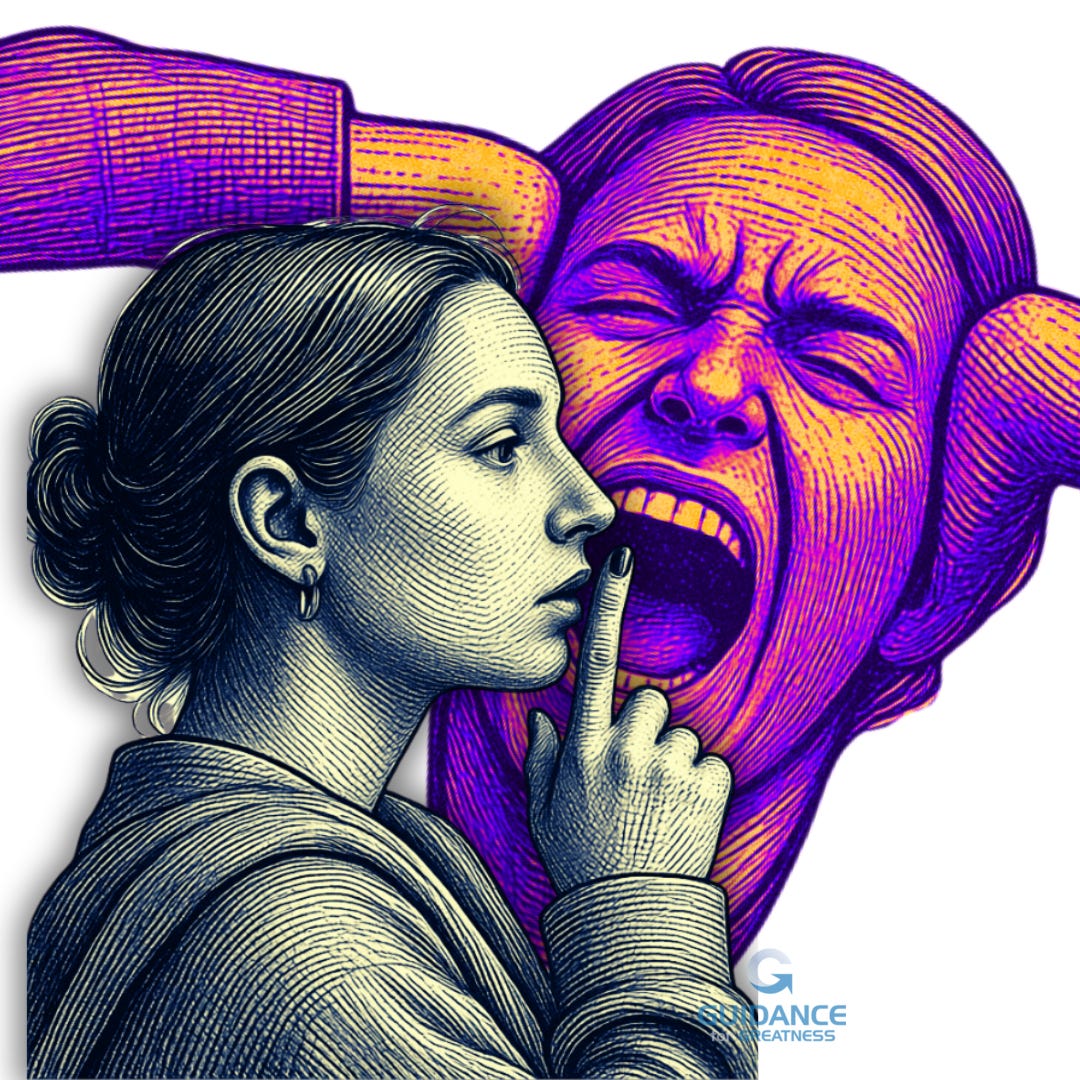
Try to recall a time when you suffered some sort of acute pain. It could be physical, psychological, or both. What did you do to cope? How did you make it through till this moment? Perhaps your pain is still with you. How do you deal? Did you or do you ever voice your pain, telling someone—anyone—what you’re enduring?
Now imagine that in your pain, in your expression of your pain, no one listens. Or maybe they listen, but they let you know they don’t care. Your pain is all in your head or not so bad or they’ve seen worse or there are other things to focus on. Maybe you don’t have to imagine because that silencing—which is what it is—actually took place or is taking place.
What is the effect of that silence on the pain? What did the pain feel like before you could voice it and after you were silenced? For many, being silenced enhances the pain.
When I was a college freshman, I sprained my ankle. It hurt a lot. I’ll admit, I was pretty whiny about it, but I thought that, for once, maybe I should get a little extra attention from friends as I hobbled about. One person—what we would now call a “frenemy”—ripped into me for complaining. No one came to my defense. I was shamed into silence. This all took place before I went to the hospital, before I knew it wasn’t broken.
Many decades later, I don’t recall the pain that was shooting through my appendage. I don’t even remember which ankle it was. I do remember vividly the pain of being silenced in such a way and how it increased my suffering. Silence amplifies pain.
What’s true for pain is true for trauma, every type of trauma.
Recently I served on the faculty at a leadership institute, and one of the sessions was on workplace trauma. The presenter discussed “big-T” trauma and “little-t” trauma. That latter type might not seem like much in the moment, but it can add up pretty quickly as each little-t trauma piles one upon the other.
What makes it worse? Silence.
People who suffer trauma—no matter the magnitude and no matter whether it be psychological, physical, or both—may try to voice that trauma. If you want to make them suffer even more, don’t listen to them or just actively shut them down. They’ll suffer for sure.
And sometimes we don’t even need someone else to silence us. We silence ourselves, choosing to suffer alone, to tough it out. People often call that “stoicism” although that’s not accurate. Stoics address suffering through recontextualization, not denial.
Still, we heap praise on those who endure without a sound. We talk about how strong and brave they seem, and sometimes that’s the case. More often, though, they choose silence because they think they have to hide their pain or they don’t feel worthy of expression. That’s neither strong nor brave. The trauma will eventually out one way or another. Silence amplifies trauma.
I’m not suggesting that we hobble around and whine and hog all the attention like I did as a college freshman. But if speaking our pain or trauma out loud lessens it in any way or prevents more of the same, our voice becomes a tool—an implement of healing that can build resilience.
The person who’s experienced a loss or been denied a win doesn’t need some crank—like my college frenemy—who says, “Suck it up.” What purpose does that serve aside from adding cruelty to the trauma? Silence is salt in the wound.
The only other significant injury I endured as a young person was when I was in fourth grade at my Catholic school. I was participating in a lunchtime game of tag with my classmates in the schoolyard when an older girl purposely tripped me as I darted by. I actually saw her stick her foot out before launching me into the air.
I smashed headlong into a set of cement steps. The older girl and her friends laughed at me. With somehow only a little blood seeping out, I was more mortified than hurt, or so I thought.
A little later, in class, my vision started blurring, and I couldn’t read. I was too embarrassed by the memory of the girls’ laughter to say anything to the teacher, but I did timidly whisper something to my neighbor. He told the teacher, and I was sent to the nurse’s office where she determined I had a minor concussion.
As I sat there waiting for her to make arrangements to take me to the hospital, our principal walked in, Sister Dolors. She was an unpleasant scold, and when she heard what happened to me, she worked up her most accusatory tone to ask, “You were running, weren’t you?”
At my Catholic school, one of the worst offenses you could perpetrate was to run in the schoolyard or have any sort of fun for that matter. There I was, barely able to sit up, and this nun was giving me a stern lecture about the evils of childhood play. No matter that I told her an older kid tripped me on purpose. Sister Dolors didn’t want to hear it because I shouldn’t have been running, period.
I was first shamed by laughter and then admonished into silence; meanwhile, the girl got away with intentionally injuring me. It was my own fault for running, see? The actions of the girl and her friends combined with the lecture by Sister Dolors and my concussion were merely my well-deserved penance for committing the non-venial iniquity of playing tag.
I had suffered an injustice, which silencing only enhanced. Silence amplifies injustice.
These incidents I have related, my sprained ankle and my concussion, were minor, of course—mere nothings in the grand scheme. They don’t loom large in my memory, and, frankly, I’ve had it pretty good compared to most others. Still, what’s striking is that I don’t remember the physical pain of either incident. I do remember the psychic pain of being silenced, though. Even with peccadilloes, even across the years, silence wails.
Everyone out there has experienced far worse pain, trauma, and injustice than what I’ve described here. I have too. And many have had experiences so excruciating that I can barely imagine let alone describe them. If people can’t express them because others won’t listen or will dismiss them or will openly block their voice or because they themselves deny their own voice, the anguish will be all the more torturous.
Have you ever had to sign a non-disclosure agreement, an NDA, to buy your silence when you were the wronged party? It happens all the time, and it’s horrible. Sometimes the NDA precludes you from even telling people you signed the NDA. The money or whatever benefit that accrues from making such an arrangement may seem enough, but it rarely is. Too often, though, individuals are backed into a corner by powerful entities or people and sign out of necessity. It can be a matter of survival.
Whatever wrong—pain, trauma, or injustice—the NDA is designed to shroud still lingers in memory whether you can speak of it or not. The NDA means you know someone did you wrong, but no one else does, which allows wrongdoers to continue to inflict pain, trauma, and injustice free of scrutiny. Even when others witnessed it, your silence tricks them (or allows them to trick themselves) into thinking that what they saw wasn’t so bad.
We all know of women who confronted harassers and whose subsequent NDAs led to further anguish—their own and others’. Some silence themselves out of fear, shame, or futility. Meanwhile, an abuser can ride those NDAs—that silence—all the way to the top, sometimes all the way to the White House. The very reverse of justice and decency.
That’s often the function of the NDA. It’s an insidious instrument that forces the victim to continue to squirm while the perpetrator squirms free.
The author Zora Neale Hurston observed, “If you are silent about your pain, they’ll kill you and say you enjoyed it.” As a Black woman in Jim Crow America, Hurston was not exaggerating. Being unable to stand up for yourself means others get to keep you down or much, much worse. Silence kills.
The leader’s job—the true leader’s job—is to create a space and time for those in pain, those enduring trauma, and those facing injustice to say their piece. That doesn’t mean everyone should be howling and rending their clothing at the slightest provocation. The leader is there to regulate—to assure that people who need to speak get to speak.
It’s one of the most challenging duties of leadership—giving voice to the otherwise voiceless. That certainly doesn’t include speaking for others, and it can go far beyond just bending an ear. Leaders open the space for others to break the silence; it’s a matter of empowerment. Sometimes that empowered voice then gets raised against the same leader who has enabled it. Irony’s a bitch.
True leaders recognize silence in the face of bad things as an amplifier of suffering. They know that enforced silence—be that enforcement internal or external—affronts our sense of wellbeing and even safety. Silence is the tool of the cruel. Leaders stand tall as its sworn enemy.
What? You’re still here? I’ll bet you’re pretty sick of all the enumerated listicles and guru banalities the leadership advice-industrial complex doles out.
Want more of something different? Subscribe to my weekly leadership epistle. I love paying subscribers, but most people freeload.
Email me at jim@jimsalvucci.com to talk leadership, push back on something I’ve written, or just say hello.
To my paying subscribers, I appreciate the support. Really.
Want still more? Find my book, Greater than Great, on Amazon. Leaving a review brings 5 months good luck. Or check out my talk for TEDx Clarkstown.
Intro and outro podcast theme music by LiteSaturation from Pixabay.